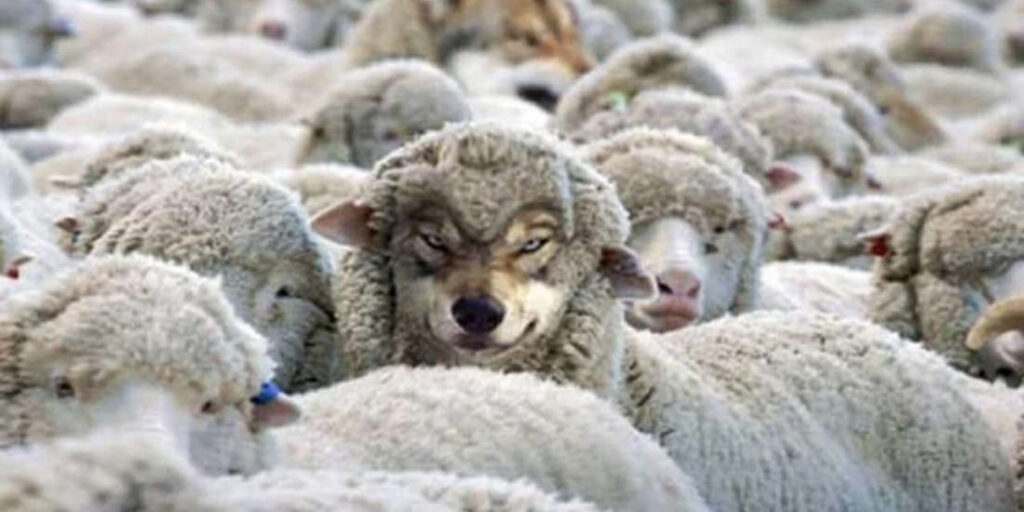
“The Wolf and The Shepherd”, an Aesop’s Fable written in 1919.
A Wolf had been prowling around a flock of Sheep for a long time, and the Shepherd watched very anxiously to prevent him from carrying off a Lamb. But the Wolf did not try to do any harm. Instead he seemed to be helping the Shepherd take care of the Sheep. At last, the Shepherd got so used to seeing the Wolf about that he forgot how wicked he could be.
One day he even went so far as to leave his flock in the Wolf’s care while he went on an errand. But when he came back and saw how many of the flock had been killed and carried off, he knew how foolish to trust a Wolf.
Moral – Once a wolf, always a wolf.
As with all man-made problems, they start out innocent enough so as to lure us into dropping our guard. We are easily persuaded into believing something or someone is not what or whom they seem to be. This short fable explained it well in 1919 because many people in Aesop’s world were familiar with sheep. They understood the nature of the three parties associated with this problem; the shepherd, the sheep and the wolf. That is not the case today but with a little explanation we can bring this powerful tale into current times.
The shepherd was not a hired hand. A shepherd owned the sheep and was fully responsible for their well-being. In modern times this role can be likened to a business owner or a head of household. The sheep depended completely on the shepherd for protection. Sheep are a docile animal that follow their shepherd without much question. The bulk of the human race closely emulates this pattern of trust and dependence at varied times in their life. The wolf preys on the sheep for its survival. It is a natural foe to the sheep and uses their nature against them. Some people take advantage of the sheepish nature of others acting as a predator to the meek of the flock. When these people succumb to their wolfish behaviors, their selfish nature will not allow them to change. “Once a wolf, always a wolf.”
Every man-made personnel problem will have these three entities involved in the problem. We will have a leader who will be responsible for protecting the team, the team themselves and the person who is wishing to take advantage of, manipulate or harm one or more of the team. The leader, as a Solutionary, is the one person who should be well trained in various techniques of handling all type of potential problems; including the spotting of the probable wolves.
What was not well explained in the fable was the fact that dogs were routinely used by the shepherd to keep the sheep in control and thus safe. A wolf is a species of dog; thus, it can easily be mistaken for dog. People who have a wolfish nature look like a shepherd or other sheepish people. However, “Once a wolf, always a wolf.”
We each have our own roles to play in the problems we face. Sometimes we are the shepherd, sometimes the sheep, and hopefully very rarely, we might even be the wolf, causing our own problems. If we understand this and desire to be a successful team player we should be able to control which we intend to be.
Abe Lincoln understood this best when he said this in reference to identifying the sheep from the wolves in the debate over the slavery problems.
“The shepherd drives the wolf from the sheep; for which the sheep thanks the shepherd as his liberator, while the wolf denounces him for the same act as the destroyer of its liberty. Plainly, the sheep and the wolf are not agreed upon a definition of liberty.”
Abraham Lincoln, Solutionary and President of the United States
If this is my last post, I want all to know there was only one purpose for all that I have written; to have made a positive difference in the lives of others.
Anthony “Tony” Boquet, Solutionary, author of “The Bloodline of Wisdom, The Awakening of a Modern Solutionary” and “The Passion, Death, and Resurrection of Jesus Christ, A Devotional Timeline”