Some inventions are so simple, so universal, and so enduring that they become part of our cultural vocabulary. The mousetrap is one of them. Patented in the late 1800s and reinvented thousands of times since, it stands among the oldest and most frequently patented devices in history. It’s often said that “build a better mousetrap and the world will beat a path to your door,” because the design embodies timeless ingenuity: simple, effective, and universally understood.
But beyond its mechanical cleverness, the mousetrap offers a surprising lesson in the Wisdom of Three, a triadic pattern woven into creation, human behavior, and spiritual truth.
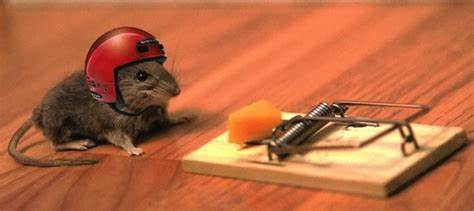
Every mousetrap, no matter the design, contains three essential elements: the bait, the mechanism, and the consequence. These three parts work together with perfect clarity. Remove one, and the trap fails. Keep all three, and the outcome is inevitable. Try to add a fourth… you can’t. In this way, the mousetrap becomes more than a tool; a metaphor for the choices we make and used as a tool of a natural law, the eternal truth can govern our lives.
The bait represents temptation, the lure of desire, comfort, or opportunity. It appeals to the senses and promises something easy. In life, our “bait” may be pride, sinful pleasures, shortcuts, or selfishness. Temptation seem to be everywhere but it is never random; it is always placed where it will be noticed. The Wisdom of Three reminds us that the first step in any decision is recognizing the problem and why it is one for us.
The mechanism symbolizes action, the moment when curiosity becomes commitment. In the trap, the mechanism is precise: one touch to the trigger, brings to life the entire system. In our lives, the mechanism is the choice we make. It is the point where intention becomes reality. Wisdom teaches us that every action carries weight, and once the mechanism is engaged, the outcome begins unfolding and most of the time, we cannot stop it.
The consequence is the final and third truth, the result that cannot be undone. In the mousetrap, the consequence is immediate. In life, consequences may unfold slowly, but they are just as certain. Every decision produces fruit, whether good or harmful. The Wisdom of Three reminds us that consequences are not punishments; they are simply the natural completion of the choices we make. And like the mousetrap, the creator of the consequence, is not the only one that can be harmed.
When we apply this triadic lens to our personal, professional, and spiritual lives, the mousetrap becomes a quiet teacher. It shows us that temptation is real, choices matter, and consequences follow. It reminds us that wisdom is not found in avoiding the bait, but in understanding it. It teaches us that the mechanism, our free will, is a gift meant to be used with intention. And it reveals that consequences, even painful ones, can become pathways to growth, humility, and redemption.
The mousetrap may be simple, but its lesson is profound: every moment of life contains a triad of attraction, decision, and outcome. When we learn to see these three parts clearly, we begin living with greater awareness, deeper responsibility, and stronger faith.
The Wisdom of Three is everywhere, even in a humble mousetrap, reminding us that truth is often hidden in the simplest things.
If this is my last post, I want all to know, there was only one purpose for all that I have written; to have made a positive difference in the lives of others.
Anthony “Tony” Boquet, Solutionary, author of “The Bloodline of Wisdom, The Awakening of a Modern Solutionary” and “The Passion, Death, and Resurrection of Jesus Christ, a Devotional Timeline”