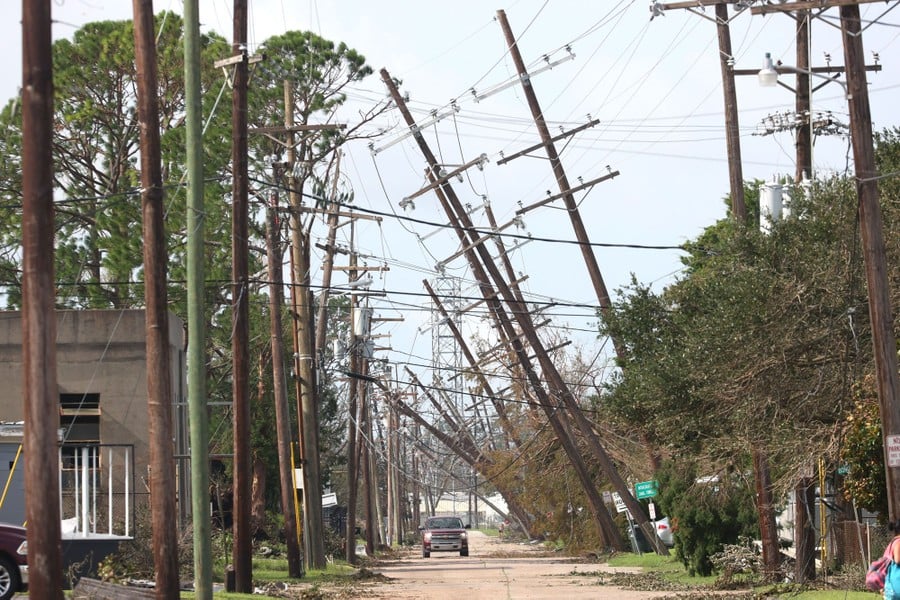
When Hurricane Ida struck the coastal town of Houma, Louisiana in September of 2021, the wind arrived like a relentless force from hell. Roofs peeled back like old paper, porches became driftwood, and the sweet rhythms of everyday life, busy school days, shrimp boats loaded with their catch, church bells telling the time, were swallowed by, wind, water, and prayers. Streets that once flowed with traffic were clogged by downed electric lines and fallen branches. Homes sported blue tarps, and neighbors who had always waved in joy now searched one another’s faces for a sign of hope.
In the week after the storm, a man named Clyde, whose family had fished the bayou and lakes for three generations, walked the country lanes with a Cajun determination and a larger measure of stubbornness. His house was a shell, his skiff floated upside down, and the monthly bills would soon stack higher than the debris across the highway. Yet every day he carried two things through the neighborhood: a battered toolbox and a thermos of coffee. He went house to house, doing whatever was required. When he finished one project, he moved to the next. He didn’t wait for the city crews, insurance assessors, or hired contractors; no one knew when they would arrive.
Others soon pitched in; remembered that old code of the bayou country: neighbors help neighbors. A schoolteacher who’d lost nearly everything used her classroom blackboard to list chores and resources, generators, diapers, tarps. A group of teens who’d lost power turned a leaking church hall into a charging station, using a borrowed generator, passing out sandwiches and giving phone chargers like warm bread. A retired carpenter worked beside teenagers, teaching them how to nail a board straight and square. A widow with a trailer full of good gumbo and rice, fed a line that grew longer each day, as if hunger itself needed the taste of community to be healed.
Months later when inspectors came through, they found much needing repair, but they also saw new docks patched with hands that had never owned boats, gardens planted in yards that had been mud puddles, and a tiny lending circle started over coffee to help rebuild engines and replace refrigerators. Insurance checks were needed and welcomed, but the true restoration was of the people in neighborhoods that could always count on one another.
Someone asked Clyde, sitting on a crate of salvaged tools, why he’d worked so hard despite his own losses. He looked out over the water where a handful of small boats bobbed again, patched and painted, and said simply, “The storm takes, but it also teaches how we must give back.” He pointed to a boy who he taught to splice a line and added, “God allowed the storm to come, but He didn’t do it to punish us. Maybe he did it so we’d learn who we can be when the lights go out.”
This parable of Houma does not erase the sorrow, the cost, or the fear of waking up at night to the memory of floodwater under your bed. It does not pretend wounds never occurred. But in the storm’s aftermath, God’s grace was threaded through the work: brokenness became invitation, loss became service to others, damage taught new skills, and grief widened into a deeper compassion. God did not will the hurricane’s cruelty, yet from the ruin He drew a new good, the reclaiming of selfless love, the reknitting trust in humanity, the discovery that hands, when joined, can reset what the wind ripped apart. The mercy of God can be used by people to turn bad into better, ruin into new, and loss into a living gift.
If this is my last post, I want all to know there was only one purpose for all that I have written; to have made a positive difference in the lives of others. Anthony “Tony” Boquet, Certified Professional Business Coach, A Solutionary, and the author of “The Bloodline of Wisdom, The Awakening of a Modern Solutionary”and “The Passion, Death, and Resurrection of Jesus Christ, A Devotional Timeline”