
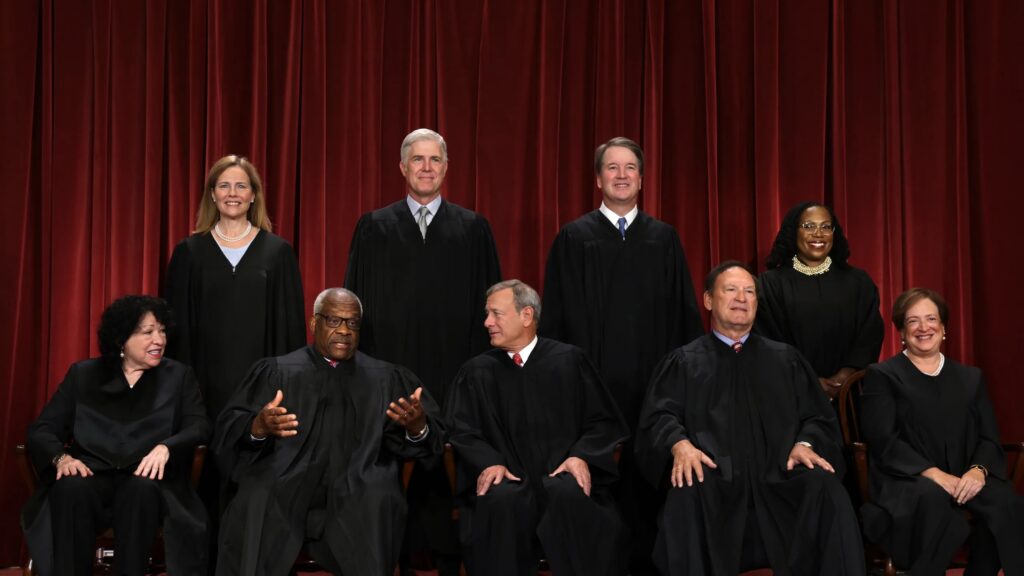
The Framers of the Constitution designed the Supreme Court with a single, unwavering purpose: to protect the Constitution from the storms of politics. They understood that public passions rise and fall, parties gain and lose power, and cultural winds shift constantly. But the Constitution, our nation’s foundational truth, needed guardians who were insulated from those pressures.
This is why Supreme Court justices serve life terms. Article III states that federal judges “shall hold their Offices during good Behavior.” The intent was clear: a justice who never has to campaign, seek reappointment, or fear political retaliation is free to interpret the Constitution based solely on what is true; not what is popular. Life tenure protects judicial independence. It ensures that justices answer to the Constitution, not to presidents, parties, or public opinion.
But the structure of the Court itself also matters. The Constitution does not set the number of justices; Congress does. The Court began with six justices in 1789, and the number changed several times, sometimes for practical reasons, but often for political ones. During and after the Civil War, Congress manipulated the size of the Court specifically to block President Andrew Johnson from making appointments. This political tug‑of‑war weakened public trust and threatened the Court’s neutrality.
That is why the Judiciary Act of 1869 was so important. Led by Senator Lyman Trumbull, Congress passed this act to end political interference and restore stability to the judiciary. The Act set the number of justices at nine, where it has remained for more than 150 years. Nine symbolizes completeness and finality, and most importantly, signaled that the era of manipulating the Court for political advantage needed to end. The nine justices form a bench meant to deliver final, truth‑based judgments, not political victories.
And this leads to the heart of the matter: The Supreme Court must remain non‑political. Its role is not to deliver wins for the left or the right. Its only allegiance is to the Constitution. When constitutional interpretation becomes “good for our side” or “bad for theirs,” the Court ceases to be a court and becomes a political weapon. The Framers feared this deeply. They created three branches of government precisely so that one branch, especially the judiciary, could stand apart from partisan agendas.
A justice’s duty is to seek the truth embedded in the Constitution, even when that truth is inconvenient, unpopular, or politically costly. A nation cannot survive if its foundational law becomes a tool of political preference. But a nation can thrive when its highest court remains anchored in principle, protected from pressure, and committed to truth.
That is why life terms matter. That is why nine justices matter. And that is why the Supreme Court must remain non‑political—so that the Constitution, not politics, remains the final word.