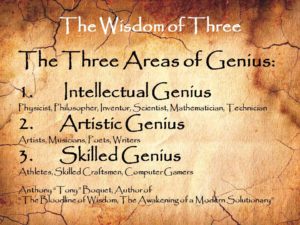
The title of “Genius” is a very prestigious one, denoting a level of intelligence rarely found in the general population. The word means guardian spirit. The Romans believed that people who were extremely smart or exceptionally talented were gifted so by this entity. Assets to the world, these talented people have always been elevated by the public, mainly because of the sense of awe that they generate in their area of specialty. It is through their efforts that they strive for amazing physical feats in the sporting arenas, explore the hidden secrets of our own minds, or create unimaginable beauty in a timeless masterpiece of art. As with all benefits, so come the challenges. Due to the uniqueness of their impressive gift, a genius is prone to an elitist attitude.
They are special and they know it.
Even rarer than a genius is the wise genius, someone who can successfully wages war and conquers their own internal hubris before it can naturally invades the selflessness of humility.
My first book, “The Bloodline of Wisdom, The Awakening of a Modern Solutionary”, begins with this very important quote.
“I know that I am wise, because I know that I know nothing.”
Socrates
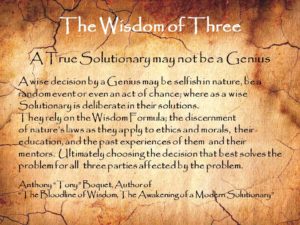
That phrase is so important because Socrates emphasizes that the desire to obtain wisdom comes from a very selfless place in the heart of a Solutionary; not from their mind, as many people believe. He was able to grasp that wise solutions are initially formed from a place of humility not from a selfish genius acts or thoughts. That is why you can be a brilliant person but if you have a selfish nature, you will never be wise.
Wise decisions, by their very nature, are never selfish. The solution must satisfy all three entities affected by the problem needing to be solved. It is important to understand that the selfishly brilliant among us can wisely solve problems through the use of their genius but their wise decisions will not be intentional; thus the decision is deemed wise but the person is not. This person would best be described by the title of problem-solver, which is not necessarily a bad identity to bear. Society will always need intelligent people who discover, understand, and teach others information not easily comprehended. However, these people may not be capable of intentionally applying their knowledge as a wise solution to a problem
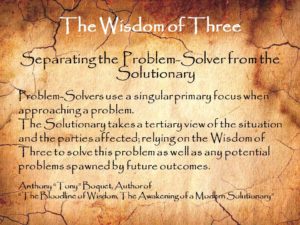
The selfish genius can be a useful problem-solver without doubt. They can and do serve a great purpose in our lives. However, the problem-solver’s focus usually leads them to have a limited view of the problem. This approach can generate unwise solutions which are prone to benefit one entity over the others and will likely not consider the ramifications of the consequences associated with that choice. As with any problem, there will always be three types of solutions; the right one, the wrong one, and the acceptable concession. Only the wise solution will use the right decision that will be best for all parties, be based on moral and ethical truths, and solve the problem with the fewest future adverse consequences.
Anthony “Tony” Boquet, the author of “The Bloodline of Wisdom, The Awakening of a Modern Solutionary” and “The Passion, Death, and Resurrection of Jesus Christ, A Devotional Timeline”
If this is my last post, I want all to know there was only one purpose for all that I have written; to have made a positive difference in the lives of others.