Advent, derived from the Latin adventus meaning “coming” or “arrival,” ushers us into a sacred season of watchful expectation. It is no mere prelude to Christmas but a profound invitation to contemplate God’s eternal presence woven through the tapestry of time. As the Church teaches, Advent reveals the Power of the Wisdom of Three using the visions of the Divine, using the three human stages of time: past, present, and future, each illuminating Christ’s threefold comings: historical, mystical, and majestical. These stages stir the soul with awe, drawing us into the mystery of a God who transcends human history yet intimately engages our human story.
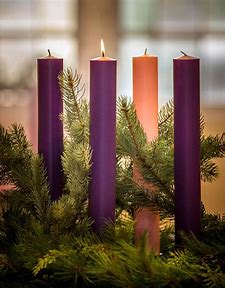
The first coming gazes into the past, beholding the historic Jesus who shattered eternity’s veil in the Incarnation. Here, we recall the humble Bethlehem manger, where the Word became flesh some two millennia ago. As Pope Paul VI proclaimed, this is where the Creator stooped to redeem His creation. Imagine the shepherds’ wonder under starlit skies, the Magi traversing deserts drawn by a celestial sign, these events echo Isaiah’s prophecy: “The people who walked in darkness have seen a great light” (Is 9:1). It is through this human history advent awakens our reverence for God’s fidelity; He entered our history not as a distant God, but as an infant, vulnerable and near to us, forging an unbreakable covenant with humanity. Through Advent candles’ violet hues, we revisit this miracle, humbled that the Eternal One chose our fragile timeline to unveil His divine love.
Turning to the present, the second coming unveils the mysteries of Jesus, and the Triune God, unfolding now, both in the hidden recesses of our souls and the heart of the Church. St. Bernard of Clairvaux described this intermediate coming as Christ’s “spiritual incarnation,” where He is born anew in modern believers through grace, sacraments, and the Eucharist. Amid daily trials, God whispers through Scripture, prayer, and communal worship, transforming ordinary moments into encounters with the divine. Pope Benedict XVI emphasized this as recognizing Christ “present in our midst,” our “travelling companion” in life’s journey. Picture the flicker of multiple Advent candles symbolizing growing light; in confession’s mercy, or Mass’s consecration, we taste eternity. This vision inspires awe at God’s immanence, He does not abandon us but dwells within, igniting hope amid shadows of the world. In the Eucharistic assembly of church, Christ comes “truly present,” bridging heaven and earth in perpetual renewal.
Finally, the third coming lifts our eyes to the future, where the glorious and majestic God triumphs in splendor. Christ’s return as King, when “He will come again in glory to judge the living and the dead” (Nicene Creed). Advent’s urgency, stirred by John’s cry, “Prepare the way of the Lord” (Mt 3:3), prepares us for this majestic dawn. It evokes trembling wonder: the Alpha and Omega, who was, is, and is to come, will gather all in perfect communion.
In these three comings, Advent orchestrates human time’s symphony, harmonizing history’s echoes, present graces, and future glory into a call to vigilance. Let us, like sentinels, watch the work of our Triune God: Father of the past, Son of the now, Holy Spirit heralding tomorrow. As we observe the lighting of the wreaths and pray, may awe seize us: the Infinite draws near, not with fear but instead, inviting us to His eternal embrace.
If this is my last post, I want all to know there was only one purpose for all that I have written; to have made a positive difference in the lives of others.
Anthony “Tony” Boquet, Certified Professional Business Coach, A Modern Solutionary, the author of “The Bloodline of Wisdom, The Awakening of a Modern Solutionary” and “The Passion, Death, and Resurrection of Jesus Christ, A Devotional Timeline”